Wednesday, September 17, 2014

Control vs Variable

Variables: Independent, Dependent, Controlled

Types of Variables in A Science Fair Project
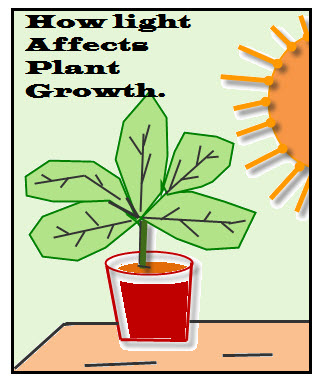
How the Independent Variable of Light affect the Dependent Variable of Plant Growth
Independent Variable- Amount of Light; Dependent Variable- Plant Growth; Controlled Variables- temperature, humidity, container, soil
Independent variables
Dependent variables
Controlled variables
variable is part of an experiment that can change, such as amount of light, temperature, humidity, time changes, or plant growth.

Independent Variable

In an experiment, an independent variable is a variable that either changes on its own, or you purposely change it.
For example: If the purpose of an experiment is to determine how changes in the amount of light on a plant affects the plant’s growth.
How Plants Grow In Response to Light
The Independent Variable is the the amount of light the plant received.
Ideas for how to change the amount of light.
1. Use sunlight which changes during the day as well as from one day to the next.
You can also use direct and indirect sunlight.
2. If you use artificial light you can determine when and for how long the plant will receive this light. You also have the option to control the wattage of light used–its color–type (fluorescent, UV, incandescent). Just use the same type of light for each test plant–see controlled var
iables below.

Dependent Variable

The purpose of  changing an independent variable is to determine how the changes affects something else, which is called the dependent variable. In other words, changes in the independent variable may cause the dependent variable to change.
In an experiment, a dependent variable may change due to the changes made in the independent variable.
For the previous plant experiment, “How Plants Grow In Response to Light,”  the growth of the plant is the dependent variable being observed  The plant growth is in response to changes in the amount of light the plant receives, is the independent variable.

Controlled Variables

Controlled variables sounds like an oxymoron. Just remember that variables are things that CAN change. This means that they can be controlled and prevented from changed.
It is important that when you experiment that you have only two variables that change:
1. the independent variable that you want to change and can measure how it changes.
2. the dependent variable that you are measuring to see how much it changes in response to the independent variable.
Changes in any other variable could affect your results.  So, you must try to control any other variable,  meaning you want to eliminate them or control them so that the things being tested are not affected.
For example, in the previous experiment, “How Plants Grow In Response to Light,” the  variables that must be controlled include, the type of plant tested, container, type of soil, temperature, amount of water, humidity, type of light, etc…needs to be the same for every plant tested. Some variable are difficult to control, but you should try to make every effort to keep them the same during the testing.
Students:

1. Create a new post
2.  Title it Control vs  Variables
3.  Write:    1.   "Control" and define it.  
                   2.  "Dependent Variable"  and define it. 
                   3.  "Independent Variable" and define it.

3.  Take a picture of your control airplane (your base model)
4.  Post  the photo under your Control Definition.
5.  Now explain what your  Independent variable is going to be.  (How are you going to change your base model or control?)
  • Do you want it to be weight?  If so, what will you add to it to increase the weight?
  • Do you want it to be size?  If so, what size paper will you use?
  • Is there another variable that you would like to experiment with?  If so that is fine, but you need to clear it with me first.  Come tell me what it is.
6.  State what your dependent variable for this experiment is.  (Everyone's should be flight distance as this is what the independent variable will change.)

Sunday, August 10, 2014

Paper Airplanes & The Scientific Method


The Scientific Method leads to the development of theories. This is done in the following way:


Scientific Inquiry refers to the many different ways in which scientist investigate the world. Scientific investigations are done to answer questions and solve problems.  Many times, investigations are said to follow the Scientific Method Scientific methods are steps that are flowed during an investigation to make sure that the information gained during the investigation is accurate, true and can be repeated with the same results.  


The Steps to the Scientific Method are:
1.  A Question or Problem is identified and stated.
2.   Research is done to find out what is already know about the topic.
3.  A Hypothesis is formed.  This is the educated guess about the results of the experiment based on the information learned during the background research.
4.  The Procedure is created.  This is very detailed, step-by-step procedure developed to test the hypothesis.  This includes materials.
5.  The Investigation is conducted and data is collected.
6.  Data is analyzed.
7.  Conclusions are drawn.
8.  Results are communicated to other scientists.

Students:
1. Please create a new blog and title it "Paper Airplane Lab"
2. The blog address should be your first initial, last name, paperairplanelab (all one word)
3. Please chose an appropriate background.
4. Please embed an image (go to layout, then gadget)

Create your first Post
1. Go to "New Post" at the top of the page when you are in "View Blog"
2. Please title it "The Scientific Method".
3. Please embed a photo that lists the steps of the Scientific Method (there are lots posted on Google Images).
4. Please then summarize the steps of the scientific method by writing out each step and explaining what it is.
5. Go to Google and learn about the difference between a theory and a law.
Please post a definition of both.

_____ 15 pts
DAY 2:  BEGIN AIRPLANE LAB:  What paper airplane design will fly the farthest?


FLIGHT INVESTIGATION


Today you will be investigating how things fly.  In your groups of four, you will be responsible for doing a quick write on four different components of aerodynamics. You need to create a new post and that briefly explains how the following terms effect flight:   A. Lift  B. Drag  C. Thrust  D. Weight

Aerodynamics

What makes a paper airplane fly? Air — the stuff that's all around you. Hold your hand in front of your body with your palm facing sideways so that your thumb is on top and your pinkie is facing the floor. Swing your hand back and forth. Do you feel the air? Now turn your palm so it is parallel to the ground and swing it back and forth again, like you're slicing it through the air. You can still feel the air, but your hand is able to move through it more smoothly than when your hand was turned up at a right angle. How easily an airplane moves through the air, or its aerodynamics, is the first consideration in making an airplane fly for a long distance.

Drag and Gravity

Planes that push a lot of air, like your hand did when it was facing the side, are said to have a lot of "drag," or resistance, to moving through the air. If you want your plane to fly as far as possible, you want a plane with as little drag as possible. A second force that planes need to overcome is "gravity." You need to keep your plane's weight to a minimum to help fight against gravity's pull to the ground.

Thrust and Lift

"Thrust" and "lift" are two other forces that help your plane make a long flight. Thrust is the forward movement of the plane. The initial thrust comes from the muscles of the "pilot" as the paper airplane is launched. After this, paper airplanes are really gliders, converting altitude to forward motion. Lift comes when the air below the airplane wing is pushing up harder than the air above it is pushing down. It is this difference in pressure that enables the plane to fly. Pressure can be reduced on a wing's surface by making the air move over it more quickly. The wings of a plane are curved so that the air moves more quickly over the top of the wing, resulting in an upward push, or lift, on the wing.

The Four Forces in Balance


A long flight occurs when these four forces — drag, gravity, thrust, and lift — are balanced. Some planes (like darts) are meant to be thrown with a lot of force. Because darts don't have a lot of drag and lift, they depend on extra thrust to overcome gravity. Long distance fliers are often built with this same design. Planes that are built to spend a long time in the air usually have a lot of lift but little thrust. These planes fly a slow and gentle flight.

Directions:

1. Create a new post and title it "Aerodynamics". 
2.  Please review this website:  https://howthingsfly.si.edu/forces-flight
3. Research the following terms and write at least one paragraph for each term explaining how it effects flight. You need to put this in your own words and not use the definitions above. Draw and diagram to represent the concept. This is to be done individually.

  • Weight
  • Lift
  • Thrust
  • Drag

 8pts
4.  As a group, share your answers and combine all the good parts of each answer to make a great group definition. Draw a diagram of it on the white boards. Make it good! You are going to be posting it!  12pts
5. Take a picture of the white board (one for each term) and post it to your blog under your definition.
4 pts
________ 24 pts 
6.  New post  title it Aerodynamics:  Four Forces of Flight.
Under the title:  Write one paragraph about what you learned about flight. How do airplanes fly???
Insert all four pictures. 

https://www.youtube.com/watch?v=S3MMHb0I268

https://www.youtube.com/watch?v=owAmw06y4G8


DAY 3:   TODAY YOU WILL CONTINUE YOUR RESEARCH TO CREATE A HYPOTHESIS TO ANSWER OUR QUESTION.

Continue your RESEARCH  in investigating different components of flight.  This will make it possible for you to make an educated guess or HYPOTHESIS to our QUESTION "What paper airplane design will fly the farthest?"


Watch this video.  How cool would it be to have his job???

Students:
1. Open your blog from yesterday and revise your post on your component of flight.
2.  Make sure that everyone has all four white board drawing posted to their blog.

 The fun stuff! Use your ipad and search different models of paper airplanes.  Choose the ONE that you think will be the best flyer.  Make this paper airplane.  This will be your control.


DAY 4-5:   BUILDING YOUR AIRPLANE MODELS

1.  Today you will be building three different airplane models.  Pick any of those listed on the website given to you yesterday, or you may build your own.

Requirements:
A.  You must make three different airplanes
B.  The largest piece of paper you may use is 12x18
C. You may add whatever you like to your airplane
D.  You must keep a list of materials that details the materials that you put into each plane

Steps:

1.  Build your three planes
2.  List all materials that go into each different plane.
3.  Name each plane.
4.  Weigh each plane.
5.  Measure its length (tail to tip)
6.  Measure its width (wingspan)
7.  Make a new post on your blog and title it:  Paper Airplane Designs
8.  Take a picture of each of your planes and add them to your post. list the above information under the image.
BONUS:  For each plane type you need to describe their strengths and weaknesses.  Use as much evidence and detail as possible.

DAY 5:  CREATE YOUR HYPOTHESIS


NOW FOR THE HYPOTHESIS!


Students: 
1.  Go your post that asks the Question:  What paper airplane design do you think will fly the farthest?
2.  Now write  "Hypothesis":  Here you will have to chose which one of your three plane designs you think will fly the farthest. 

There  you have it.  You have your Question, Research and Hypothesis complete.
Tomorrow we will work on the Procedure.
Day 6:

The Procedure:  https://www.youtube.com/watch?v=bAYhDfvsEFU

Once you have chosen the airplane design that you would like to create, we need to make a procedure to be followed so that your conclusions will be valid and if someone wanted to repeat this experiment they would get the same results.

Students:
1.  Go to your blog and create a new post.  
2. Title it "Procedure"
3.  Please write down step by step what you will need to do to run this experiment.
4.  Copy and paste all of the data that you created in making your three different airplane models (names, size, weight, directions for folding, added materials).
5.  Now explain that you are going to fly the one plane that you have chosen as your best plane 3 times to get a good understanding of how far your plane can really fly.
NOTE:  Be as detailed as possible when writing your procedure!


Day 7:  EXPERIMENT!

Today is the day!  We will head outside and each person will be flying their airplane 3 times.   We will be measuring each flight with a tape measure in feet and inches.

Please conduct the flight tests and fill in the chart as you go:
https://docs.google.com/document/d/1vs5RXWLUaXArmQR71dYsWZnrSOeUhCGHgmSU3qt1tM4/edit


Flight Data Log
Student Name
Flight test 1
Flight test 2
Flight test 3
Longest flight
Shortest flight
Average flight


1.  Which student’s design had the longest single flight?  ____________________________


Which student’s design had the longest average flights? __________________________

2.  Which student’s design had the second longest single flight?  ____________________________


Which student’s design had the second longest average flights? __________________________


3.  Which student’s design had the third longest single flight?  ____________________________

Which student’s design had the  third longest average flights? __________________________


Day 8:   Conclusion and Final Draft of Lab WriteUp.

1.  Today you will take the data collected from yesterday's Fly Off and create conclusion that summarizes how your plane flew in comparison to other planes in the class.  Did your plane fly the farthest? If so why do you think it did?  If it didn't, why do you think it failed?  What would be things that you would change for future flights? Finally, what did you learn form completing this lab?  Did you enjoy it? Why or why not?

2.  Please now go back and review your lab write up.  Make sure that you have each step clearly written out and have used as much info as possible.  Double check your links and images.  
3.  Final draft is due the day after tomorrow.
Theory vs Law


Is a theory and a law the same thing?

Students
1. Please create a new post and title it theory vs. a law.
2.  Please watch the video above on the difference between a theory and a law.
3.  Copy and paste the video into your blog and below the video please give a five sentence summary of the difference between a theory and a law.
4.  Please then describe if the airplane lab conclusion would be a theory or a law.  Explain why!!!